How to Choose the Best Ayurveda Resort in Kerala: A 9-Point Checklist Before You Book
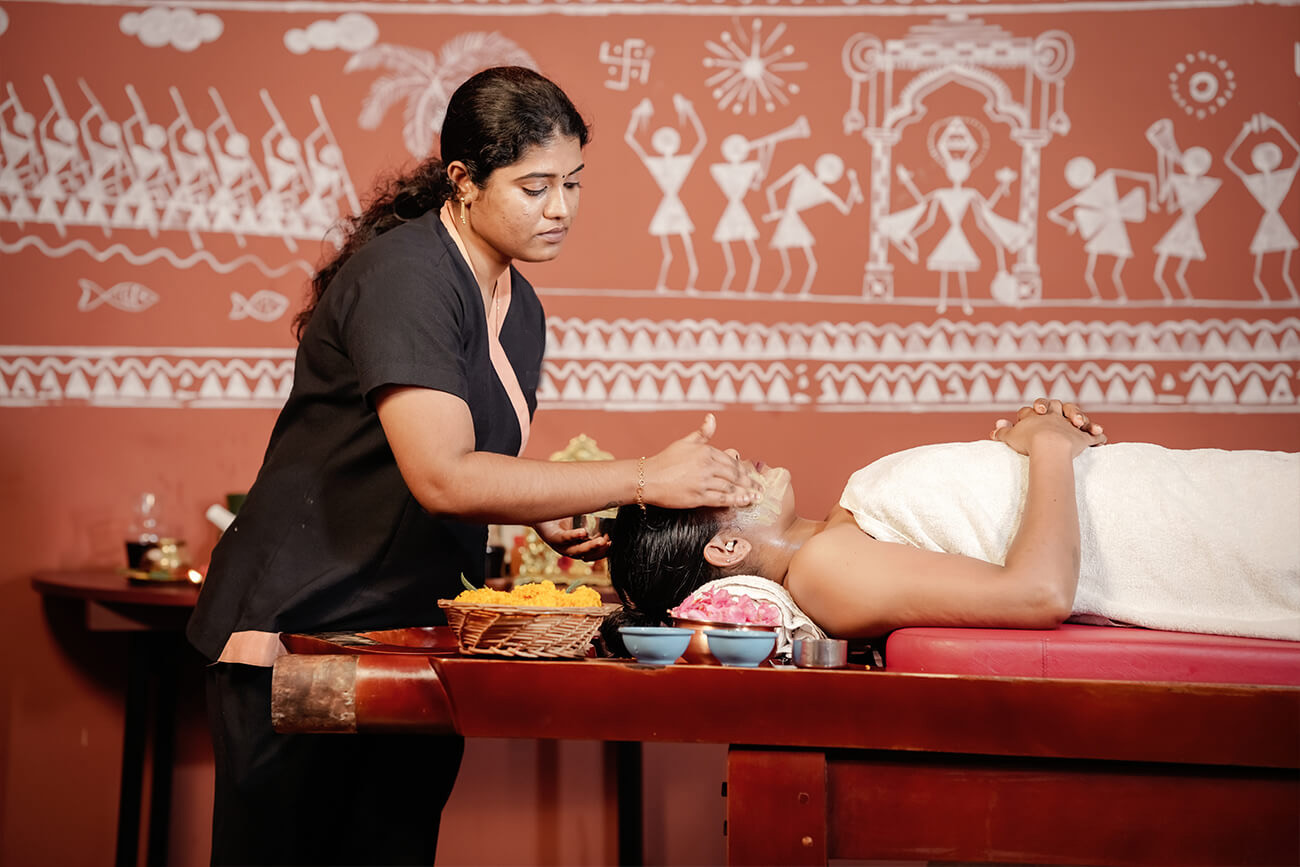
Kerala has more Ayurveda resorts than it has beaches. Search “Ayurveda retreat Kerala” and you will get properties charging ₹4,000 a night and properties charging ₹40,000 a night, and both will use the same words: authentic, traditional, personalised, healing.
The uncomfortable truth is that most of them are hotels with a massage room. A genuine Ayurvedic centre is a small clinic that happens to have accommodation. Those are two completely different things, and the difference matters enormously if you are flying halfway around the world and committing three weeks of your life.
Here are nine questions that separate them. Ask these before you pay a deposit anywhere.
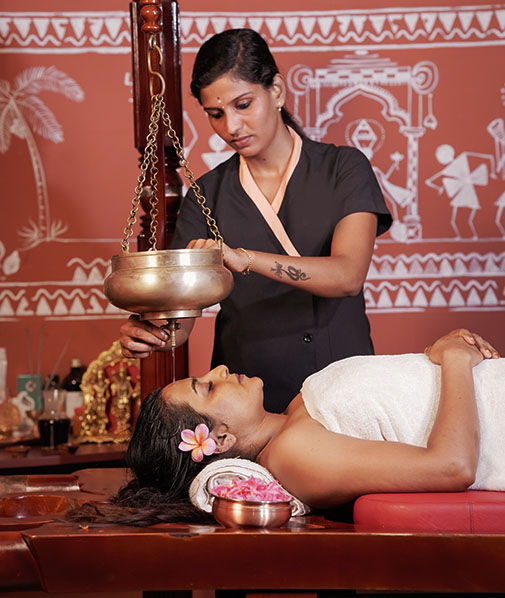
1. Who actually owns the medical knowledge?
This is the single most revealing question, and almost nobody asks it.
Most resorts hire a doctor. The doctor is an employee who arrived last year and may leave next year. The treatment protocols came from a textbook or a consultant.
A minority of properties are extensions of an existing Ayurvedic hospital or family vaidya lineage. The clinical knowledge sits inside the family, not inside a job description.
For example, Akanta Ayurveda & Yoga Cherai grew out of Sree Rudravilasam Vaidyasala Ayurveda Hospital and Research Center, founded in 1952 by Panditarajan Sri. Trikkovil Rama Warrier — physician to the Kochi royal family, who received the title Panditarajan from the Maharaja of Cochin. That practice is now led by his granddaughter, Dr. Seetha Lekshmi M.D (Ay), alongside Dr. Rajeev Kumar. The resort came later, in 2018, as a place to deliver that hospital’s treatment in a residential setting.
That is a seventy-year clinical chain. Ask any resort you are considering: where did your protocols come from, and who wrote them? The answer tells you almost everything.
2. Is there a resident doctor, or a visiting one?
“We have an Ayurvedic doctor” can mean a physician who consults every morning, or a physician who drives over on Tuesdays.
You need daily access. Panchakarma is not a fixed programme — the dosage of medicated ghee in snehapanam, the day you are ready for virechana, whether a vasthi should be oil-based or decoction-based, all change based on how your body responds that morning. Somebody with a medical qualification has to make that call every single day.
Ask directly: how many doctors are on site, what are their qualifications, and will I see one daily?
3. Does treatment start with a consultation or with a package?
Here is a fast test. Go to the resort’s website and try to book.
If you can select a therapy from a menu and pay immediately, that is a spa. Nothing wrong with a spa — but do not confuse it with medicine.
In a real Ayurvedic centre, the sequence is reversed. You arrive, a doctor examines you, assesses your prakriti (constitution) and current vikriti (imbalance), and only then is a plan written. Two guests booked on the same programme will receive different therapies.
At Akanta, prakriti analysis happens on day one, before any therapy is scheduled. The wellness programmes — Punarjani, Swasti, Agni, Ritu and others — are frameworks, not fixed menus. What goes inside them is decided by a physician after examining you.
4. Are the conditions they treat specific, or vague?
Vague sites say: stress, detox, rejuvenation, wellness.
Clinical sites say what they actually work with. Akanta’s treatments page lists conditions individually — Parkinson’s disease, stroke rehabilitation, sciatica, rheumatoid arthritis, osteoarthritis, spondylosis, frozen shoulder, gout, low back ache, PCOS, menstrual disorders, post-menopausal syndrome, infertility, obesity, stress, anxiety and depression — and for each one sets out the Ayurvedic correlation, the treatment principle, and the specific therapies used.
You do not need to understand every Sanskrit term. What you are looking for is whether somebody has bothered to write clinical reasoning down. Marketing copy is easy. Treatment principles are not.
5. How long is the minimum programme?
Be sceptical of anywhere selling a “3-day panchakarma.”
Real detoxification has three phases — purvakarma (preparation), pradhanakarma (the main cleansing procedures), and paschatkarma (rebuilding). The preparation phase alone, where medicated ghee is taken internally to mobilise toxins from the tissues, typically runs several days before any cleansing begins. Rush it and you get an oil massage with a Sanskrit name.
Serious centres structure programmes in weeks and are upfront about the minimum. Akanta’s wellness programmes run 7, 14, 21 or 28 days, with a minimum seven-night stay recommended for any panchakarma programme, and the weight management programme starting at 21 days because anything shorter cannot deliver a metabolic result.
If you have only a few days, that is completely fine — book a short yoga and rejuvenation stay and enjoy it. Just do not call it panchakarma, and do not pay panchakarma prices for it.
6. Is yoga included daily, or sold separately?
Ayurveda and yoga are meant to work together. Therapy opens the channels; yoga and pranayama keep them open.
A resort that charges extra for a yoga class is treating yoga as an amenity rather than part of the protocol. Check whether sessions are daily, whether they are scheduled at the right times, and who leads them.
Akanta runs two sessions a day on the rooftop — 7:00 to 8:00 in the morning and 6:00 to 6:30 in the evening — as part of the daily programme, and yoga is included in the daily rate rather than billed as an extra.
7. Is there a real dinacharya, or just a treatment appointment?
Dinacharya is the Ayurvedic daily routine, and it is genuinely half the treatment. Fixed wake time, cleansing of the sense organs, meals at consistent hours, no daytime sleeping, early nights.
Ask for the daily schedule in writing. A property that has one will send it immediately. A property that does not will send you a brochure.
Akanta’s runs like this:
| Time | Activity |
|---|---|
| 6:00 – 7:00 AM | Dinacharya (cleansing of all sense organs) |
| 7:00 – 8:00 AM | Yoga and meditation (rooftop) |
| 8:00 – 8:30 AM | Breakfast |
| 9:30 AM onwards | Morning treatment session |
| 11:00 – 11:30 AM | Herbal juice |
| 1:00 – 1:30 PM | Lunch |
| 2:30 PM onwards | Afternoon treatment session |
| 4:00 – 4:30 PM | Herbal tea |
| 6:00 – 6:30 PM | Yoga and meditation (rooftop) |
| 6:30 – 7:00 PM | Sunset walk |
| 7:00 – 7:30 PM | Dinner |
Notice there is no à la carte restaurant and no late dinner. That is the point.
8. Is the food prescribed or chosen?
If there is a buffet with a dessert counter, the kitchen is not part of the treatment.
In Ayurveda, food is the primary medicine. Meals should be matched to your dosha and adjusted through the phases of treatment — lighter during cleansing, gradually rebuilt afterwards. Akanta’s kitchen prepares meals according to individual dosha type using locally sourced organic ingredients, with all meals included in the daily rate, and the diet shifts as your programme progresses.
9. What exactly is included in the price?
This is where most of the unpleasant surprises happen.
At many Kerala properties the headline rate covers the room and food, and then consultations, medicines, and each individual therapy are billed separately. A fourteen-day programme can end up costing forty percent more than advertised.
Ask for one thing in writing: does your daily rate include accommodation, all meals, all treatments, all medicines and yoga?
Akanta publishes a single all-inclusive daily rate covering accommodation, treatments, yoga and meals:
| Season | Single occupancy | Double occupancy |
|---|---|---|
| May – September (off-season) | €145 / ₹13,000 per day | €240 / ₹24,000 per day |
| October – April (season) | €155 / ₹16,000 per day | €260 / ₹27,000 per day |
These programme rates apply whichever room you stay in — Standard or Deluxe makes no difference to the price, so there is no upgrade decision to worry about and no upsell at check-in. A minimum seven-night stay is recommended for panchakarma programmes. On the off-season rate, a fourteen-day single-occupancy programme works out at €2,030 — with treatments, medicines, meals and yoga inside that figure rather than added to it.
Whichever property you are considering, get the equivalent number in writing before you pay a deposit.
Putting it together
Nine questions. Any centre that answers all nine clearly is worth your money. Any centre that dodges three or more is selling you a holiday and calling it medicine.
Kerala genuinely is the home of Ayurveda, and the good places here are extraordinary. You just have to ask the right questions to find them.
If you want to see how one property answers all nine, you can look through Akanta Ayurveda & Yoga Cherai’s treatment programmes or ask them directly on WhatsApp at +91 99476 15551. A resort worth booking will answer clinical questions with clinical answers — and that response alone will tell you what you need to know.
Information provided here is for general awareness only. Treatment is prescribed solely after individual consultation with a qualified Ayurvedic physician. Please consult your doctor before starting any programme or discontinuing existing medication.